


Update on the Global Digital Infrastructure (GDI) Program
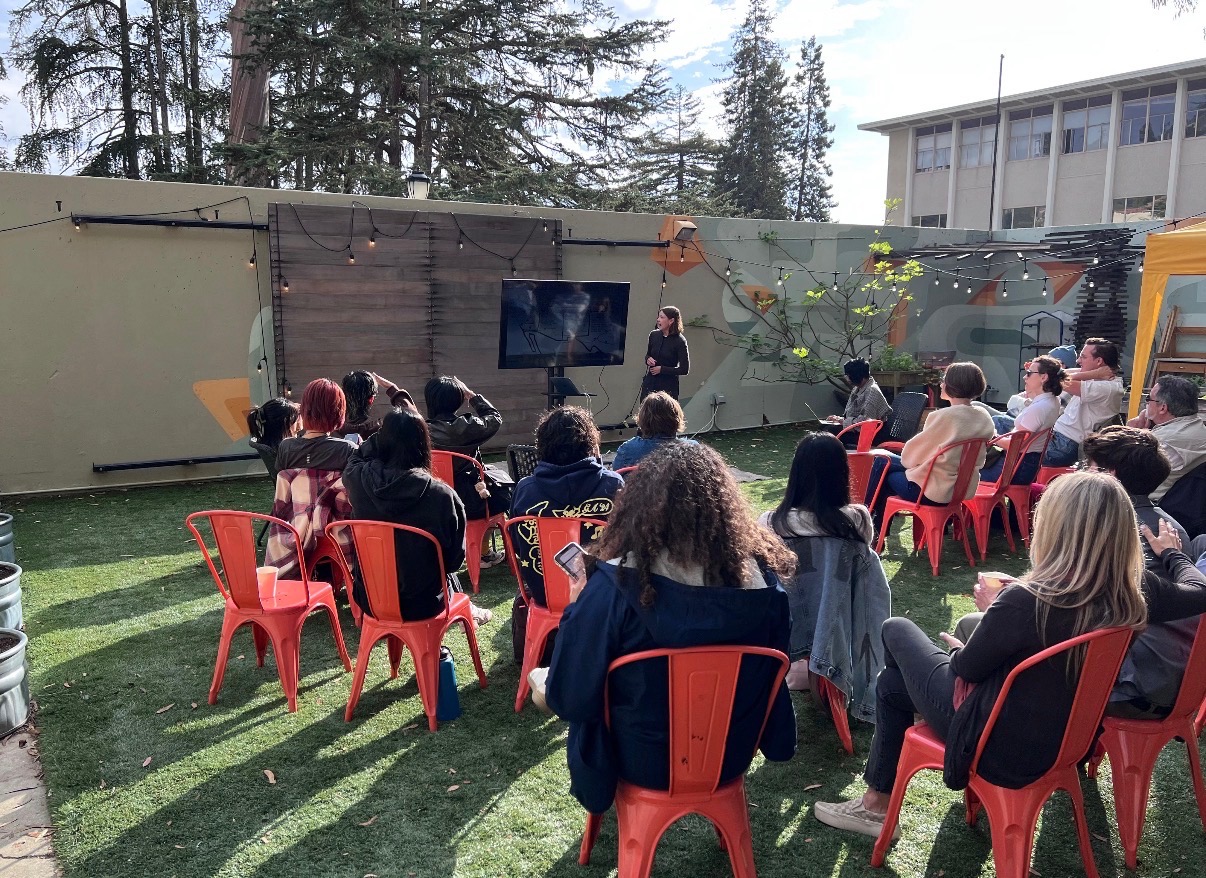
We’re thrilled to share an update on the Global Digital Infrastructure (GDI) program, launched at the Berkeley Center for New Media (BCNM) in 2025. The program offers a three-course Certificate and was recently approved as a five-course Minor! This is the first university program addressing the technical, economic, legal, environmental, and social dimensions of the global internet’s infrastructure, including both data centers and subsea telecommunications cables, and we’re thrilled that the demand for it has proven so robust.
This year, GDI courses recorded 632 enrollments — more than double enrollments achieved in 2025 — with cumulative reach to 715 students over its first two years. Seven students successfully completed the minor in its first year. As Alexandra Cole, Assistant Director of Summer Sessions, says, “Summer minors and certificates give students across disciplines the opportunity to explore new and emerging areas of study. The new Global Digital Infrastructure Minor and Certificate is the perfect example. Students have been eager to engage with this exciting new online program… It is already one of the most popular programs students can complete during the summer.”
GDI Core Classes and Students
BCNM’s Global Digital Infrastructure program offered three core classes this year — Digital Infrastructure 101, How to Build a Global Internet, and TechWars — and also expanded its curriculum with the introduction of The Human Network. This new class, taught by Dr. Diane Sanzone, industry leader, scientist, and expert in stakeholder engagement, examined the people, institutions, relationships, and communities that shape digital infrastructure. GDI has a distinctly interdisciplinary approach that reflects BCNM’s orientation to new media. The global internet is built and sustained not only through cables, data centers, and networks, but also through human collaboration.
Students participating in GDI courses come from over 70 different academic programs across UC Berkeley — from engineering, computer science, and data science to business, public policy, environmental studies, journalism, the humanities, and the social sciences. This extraordinary breadth demonstrates the relevance of digital infrastructure for many fields.
Further, the flexibility of online course offerings, and the international composition of the student body, has helped forge the kinds of connections critical to the field’s success and evolution. As Ana Carolina Haddad, PhD student at the University Institute of Lisbon, states, “The possibility of participating synchronously or asynchronously is one of the highlights of the course in my opinion. The format worked very well. The possibility of interaction between students, who are from different countries and locations, is also very enriching for the construction of knowledge.”
Another hallmark of the program is its interdisciplinary guest lecture series. This year’s lecturers were comprised of over 20 experts from not only academia, but industry and governments around the world. They included: Giovanni King, Chief Executive Officer of Blue Nap Americas and the Chairman of the Caribbean Datacenter Association; Jeff Wabik, Chief Technology Officer of DC Blox; Vlad-Gabriel Anghel, Head of Solutions Engineering and Sebastian Moss, Editor-in-Chief and Head of Global Publishing at Data Center Dynamics; Maxie Reynolds, Founder of Subsea Cloud; Eric Sjöstedt, Virginia Tech; Amy Tidwell, Global Socioeconomic & Human Rights Manager, Exxon Mobil; Dr. Daniel Cassedy, Senior Archaeologist; Saud Althubaity,Director of the Rapid Response Unit at the Digital Cooperation Organization (DCO) in Riyadh, Saudi Arabia; Fernando Azevedo,Head of Connectivity at Start Campusin Sines, Portugal; Mary Allen, Co-Founder and Chief Content Officer at InsightaaS, among many others. These leaders collectively gave students a peek into what a sustainable and globally equitable digital infrastructure system might look like.
A cohort of UC Berkeley students supported the program as GDI Teaching Fellows in Summer 2026, including BCNM Designated Emphasis PhD student Evan Dowell. Two of these Fellows, Ella Herbert and Martina Wu, have gone on to internships with Dr. Sanzone to pursue further work in stakeholder engagement. Sanzone and Herbert will be representing the program this Fall in Chicago at the International Conference for High Performance Computing, Networking, Storage, and Analysis.
Benson Ou, a GDI Teaching Fellow, remarked: "Serving as a GDI Teaching Fellow gave me a unique vantage point. Not only did I get to ask questions and learn directly from top industry experts and academics, but I also got to see what students thought in real time. Watching students digest high-level industry insights and translate them into their own research and creative projects was easily one of the best parts of the role."
This sentiment’s echoed by Yanik Traça Antunes, a Portugal-based graduate of the GDI Certificate, now working with Triline Cable Consultants, Inc: "To have an understanding of the entire infrastructure gives us a new perspective… it's like looking at a house from the front, or from up above in the sky… from up above we can see everything. You can talk about apples, but when you know the tree that the apple comes from, and you know how it works, the kind of environment, the timing — it's now a completely different perspective."
Undergraduate Research Apprentice Program Highlights
The GDI program has been supporting students in the Undergraduate Research Apprentice Program (URAP) at UC Berkeley for the past several years. Through URAP@GDI, students work on cutting-edge research in digital infrastructure that advances the curriculum. Some of our current research projects includes:
Digital Infrastructure for Space (DI4S), led by Dr. Iago Bojczuk, through which the GDI team examines the integration of space-based computing assets with terrestrial digital networks, effectively extending global cloud, data center, and telecommunications stacks into outer space. Driven by the rapid growth of the commercial space economy, DI4S bridges aerospace, computer science, business, policy, and the humanities to address the unique technical and societal dimensions of Earth-space computing. Its scope encompasses four key domains: overcoming the engineering hurdles of orbital processing and hardware resilience (such as radiation, thermal management, and bandwidth constraints); mapping new business models and market dynamics for orbital edge computing; navigating complex geopolitical, regulatory, and security issues such as those involving data sovereignty and spectrum management; and analyzing the broader social and ethical aspects of extending infrastructure beyond Earth.
The research group, The Architecture of Digital Borders, is led by PhD and BCNM Designated Emphasis student Isadora Bratton-Benfield, and examines digital infrastructures as architectural forms that are inseparable from geopolitics. The team explores how digital infrastructures are intentionally designed and physical sites where sovereignty is actively contested. How is the design and site location of digital infrastructure responsive to the tensions arising from global interdependence and bordering practices?
To answer this question, the group documents the policies, architectural, and creative practices that define and reimagine the infrastructures that are crucial to digital life. Current research group members include the UC Berkeley undergraduate students Martina Wu, Xuewei (Sylvia) Luo, Yoga Weng, Romy Ray, and Paris Asher. They recently completed two online guidebooks for A Counter-Imaginary in Authoritarian Times, one titled, “Art as Resistance on the Fractured US-Mexico Digital Border” and the second concerning US-China technological decoupling. Their forthcoming paper in Oxford Intersections is titled “Infrastructure from Guizhou to Texas: Data Sovereignty between Firms and States.” Last fall, they were grateful to present their work in progress at the Platform Art Space.
Their work, and that of the GDI program as a whole, embodies what Amina Ibrahim, a Tanzania-based program participant, shared about her experience: “The combination of technical and strategic content gave a well-rounded view of digital infrastructure security. The focus on current issues like geopolitics and climate risks made the learning very relevant to real world challenges.”
Stay Connected
We’re delighted by the GDI program’s successes so far, and look forward to its growth in the years to come, including an array of new courses to be offered through BCNM in summer 2027, as well as the program’s potential adoption at the community college level. Stay tuned for more information and be sure to sign up for the BCNM newsletter to receive updates on all things GDI!
Download a PDF of this update, with additional graphics, here.